 Skip to Content
Crush Injuries from Winches, Nets, and Loading Arms
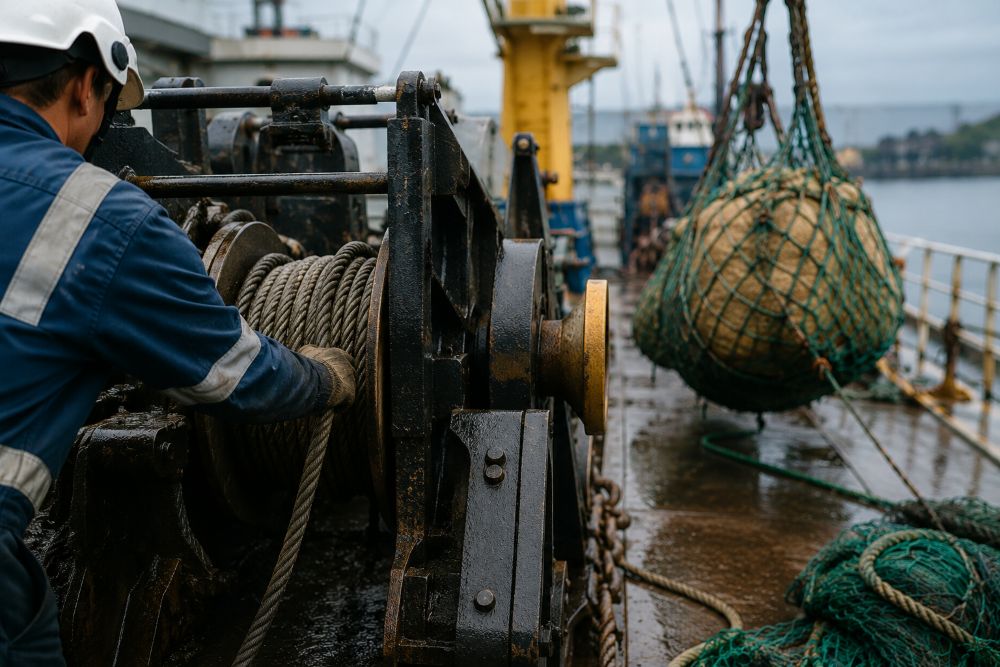
Ever worked near a roaring winch or a swinging net and felt that prickle on your neck? Maritime, dockside, and industrial jobs put heavy steel, speed, and tough seas in the same place, and injuries happen in a blink.
At Shlosman Law Firm, we help crew members and port workers rebuild after catastrophic harm.
Our goal here is simple. We lay out the risks from winches, fishing nets, and loading arms, the medical fallout of crush injuries, and the legal routes that support injured workers. If you or a loved one got hurt on the water or along Louisiana docks, this guide can help you see the road ahead.
What Is a Crush Injury in Maritime and Industrial Settings?
A crush injury happens when part of the body gets trapped, pinched, or jammed between heavy objects or fast-moving machinery. The force squeezes tissue and bone far beyond what they can take. On a vessel or dock, that often means steel on steel with a worker caught in between.
The immediate damage can be brutal. Compressed tissue, shattered or displaced bones, and severed blood vessels show up in seconds. Skin can split, and deep muscle layers lose oxygen quickly.
Once blood flow is cut off, the clock starts ticking. Toxins build up inside the crushed area, then flood the bloodstream when pressure releases. Without fast care, a localized injury turns into a body-wide emergency.
Understanding the medical picture helps you act fast on deck and later with your claim. Next, we break down how these accidents happen on boats and at the dock.
Common Causes of Crush Accidents on Vessels and Docks
Crush events tend to cluster around a few machines and tasks. Winches, fishing gear, and cargo handling all move big forces through small spaces. One slip, and someone stands where the load wants to go.
Hazards Associated with Deck and Trawl Winches
Modern winches generate enormous torque, often through hydraulic power. Loose clothing, gloves, or a line loops around a hand, and the drum pulls a worker in before anyone can reach an e‑stop. Even a quick brush can turn into a full entanglement.
The cable tension itself is dangerous. If a worker is wrapped and the line tightens, chest compression leads to mechanical asphyxiation. In seconds, breathing stops while the machine keeps pulling.
Spot and reduce these hazards with steady habits like the ones below. A short checklist on every watch helps the whole crew.
- Keep machine guards and line guides in place, and inspect them at shift start.
- Use snug clothing, no frayed gloves, and keep long hair contained.
- Assign a dedicated spotter when a winch is live, even for “quick” pulls.
- Test emergency stops at the beginning of each day and log the result.
Even basic steps like these cut risk. They also create a record that supports your case if management ignores safety and someone gets hurt.
Risks Posed by Heavy Fishing Nets and Rigging
Loaded purse seines and trawl nets can weigh tons, especially when soaked. Rough seas or a snag under the hull can shift that weight without warning. The net swings, and a deckhand gets pinned against a bulwark or hatch coaming.
We have seen crush injuries when net doors catch a boot and twist a worker into the rail. Another common event is a stack of wet nets collapsing as the vessel rolls, trapping hands and knees. Seconds matter, and extraction is tricky with moving gear all around.
Crews can cut risk by mapping danger zones on deck paint, then training to keep feet out of the way. Use tag lines to control swing, and never step into the bight.
Dangers of Loading Arms, Cranes, and Load Shifting Operations
Cranes, gantries, and loading arms bring tight tolerances to busy docks. During lifting, the suspended load, boom, or forklift passes inches from ladders, railings, and trucks. One missed hand signal, and someone stands where two hard surfaces meet.
A crush zone forms anywhere a moving object closes a gap with a fixed object, like a dock wall or trailer bed. Workers get caught between a swinging container and a stack, or between a forklift mast and a pallet. These are high-force events with little warning.
Dock teams benefit from distraction-free radios, a single signal caller, and a set exclusion area marked on the deck. Louisiana ports are busy, and a few feet of buffer saves lives.
Medical Consequences of Severe Crushing Accidents
Crush injuries hit hard at first, then trigger dangerous changes inside the body. Fast rescue and the right hospital care matter a lot. The path from the deck to the ER needs to be quick and organized.
Immediate Physical Trauma
Common early injuries include multiple fractures, traumatic amputations of fingers or limbs, and deep lacerations with heavy bleeding. Nerves and tendons get torn, which complicates later recovery. Skin contamination from grease or seawater also raises the infection risk.
The pain is intense, and shock can set in fast. Cooling, splinting, and safe extraction should start on scene. Rapid transport to emergency care follows right after.
Here is a short list of early red flags that call for urgent treatment. Crew training should cover each sign and the first steps to take.
- Loss of pulse or color below the crushed area
- Severe swelling or a limb that looks deformed or rotated
- Confusion, sweating, or fainting that suggests shock
Prompt action lowers the odds of secondary damage. Good incident notes also help later when proving how the injury unfolded.
Long-Term and Secondary Health Complications
Compartment Syndrome develops when pressure inside a muscle space rises and strangles circulation.
Surgeons often perform a fasciotomy, which opens the compartment and relieves pressure. Without it, muscle dies, and nerves stop working, leading to permanent loss of function.
Crush Syndrome, also called Bywaters’ Syndrome, begins when crushed muscle breaks down. Once pressure releases, toxins like myoglobin surge into the bloodstream and can cause kidney failure or dangerous heart rhythms.
This is a medical emergency that needs fluids, close monitoring, and sometimes dialysis.
Serious Complications at a Glance
| Condition | Typical Signs | Urgent Care Steps | Time Window |
| Compartment Syndrome | Severe pain, tight swelling, numbness | Immediate surgical fasciotomy, pain control | Hours after injury |
| Crush Syndrome | Dark urine, low blood pressure, arrhythmia | High-volume fluids, electrolyte control, dialysis as needed | On release of pressure and soon after |
| Mechanical Asphyxiation | Breathing stops while the chest is compressed | Rapid extrication, airway support, oxygen | Immediate |
Doctors can treat these conditions, but time is everything. Early rescue and plain documentation from the scene support both recovery and your legal claim.
Employer Accountability and Legal Rights in Louisiana
Injured mariners and dockworkers have real protections under federal maritime law and Louisiana practice. The rules apply differently depending on where you work and how you spend your time on the water. Getting the right fit matters for your claim.
Relevant Maritime and State Laws
The Jones Act covers seamen who spend a substantial part of their work on a vessel in navigation in Louisiana waters or the Gulf of Mexico.
If an employer’s negligence contributes in any way to the injury, the seaman can file suit for damages. That can include lost wages, medical bills, and pain and suffering.
The Longshore and Harbor Workers’ Compensation Act, often called LHWCA, protects longshore workers, stevedores, and shipyard employees along the Mississippi River and at local ports.
It provides wage loss and medical benefits without needing to prove employer fault. There are also potential claims against vessel owners for unsafe conditions under Section 905(b).
All maritime workers, including seamen, hold a right to Maintenance and Cure. Maintenance pays a daily living stipend while you recover, and Cure covers medical treatment until you reach maximum medical improvement. This duty applies regardless of fault, and employers who cut it off early face penalties.
Which law fits your case depends on your job role and connection to a vessel. Our team sorts that out quickly, then pursues the path that best supports your recovery.
Identifying Forms of Employer Negligence
Crush cases often trace back to preventable safety gaps. A few patterns show up again and again on vessels and docks. Spotting them helps prove fault.
- Removing, bypassing, or failing to install machine guards and line guides
- Ignoring load charts, wind limits, or sea state during lifts
- Skipping inspections and service on aging hydraulic winches and brakes
- Letting corrosion or worn sheaves chew up wire rope until it birdcages
Breakdowns in communication and PPE enforcement also play a role. Training and supervision should keep crews ready for the worst, not guessing at the moment.
- Missing or non-functional emergency stop devices in winch stations
- No single signal caller for crane moves, or confusing radio protocols
- Failing to use hard hats, cut-resistant gloves, and flotation where required
If any of these failures contributed to your injury, it bolsters liability. Photographs, maintenance logs, and witness notes become powerful proof in court or at the negotiating table.
Pursue the Compensation You Deserve with Shlosman Law Firm
At Shlosman Law Firm, we hold corporations and insurers to account after devastating crush injuries on vessels and docks.
Our New Orleans team digs into maintenance records, training files, and scene photos to build a strong case. We push for full recovery that reflects the true cost of a life-changing injury.
Maritime and industrial claims turn on details that get lost fast. We move quickly to preserve evidence, secure witness statements, and protect your rights under the Jones Act, LHWCA, and Louisiana practice. Families can reach out while the facts are fresh.
If you or a loved one suffered a crush injury from a winch, net, crane, or loading arm, do not wait. Call 504-826-9427 or visit our contact page to schedule a comprehensive evaluation. We welcome your questions and stand ready to help you move forward with strength.